Power Training for Joint Longevity: Safe Ways to Keep Knees and Hips Quick
Learn why safe power training supports knee and hip longevity, balance, stair climbing, and aging well—plus simple PT-approved ways to start.
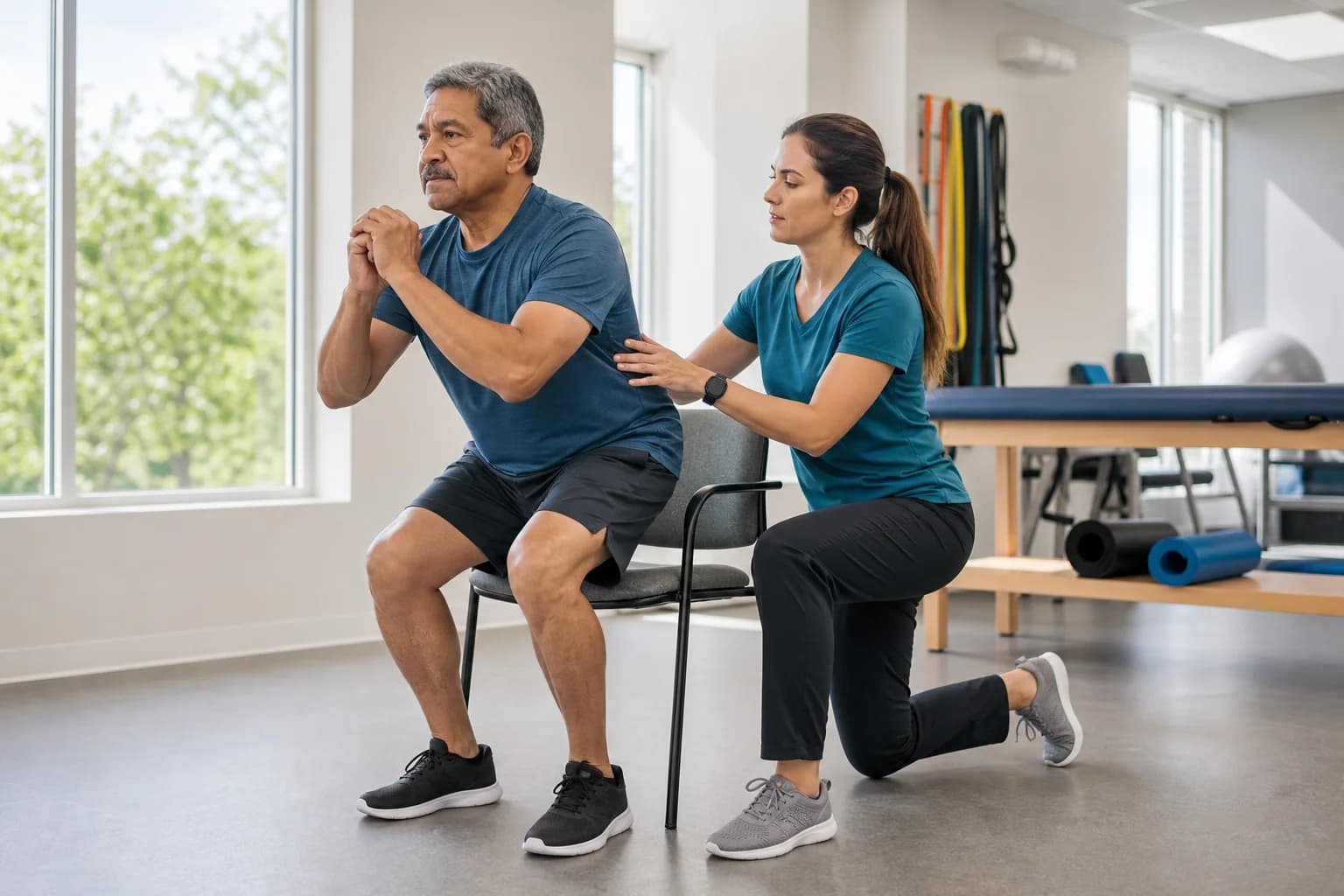
Power Training for Joint Longevity: Safe Ways to Keep Knees and Hips Quick
When people think about aging well, they usually think about strength: stronger legs, stronger hips, stronger bones. Strength is absolutely important. But there is another quality that often predicts how confidently we move through daily life: power.
Power is the ability to produce force quickly. It is what helps you stand up from a low chair without rocking back and forth, catch yourself when you trip, climb stairs without feeling like each step is a project, or step off a curb with confidence. For knee and hip health, power does not mean jumping into intense plyometrics or training like an athlete. In physical therapy, it means learning to move with a little more speed while keeping excellent control.
Why power matters for joints as we age
Muscle strength tends to decline with age, but muscle power can decline even faster. That matters because real life rarely happens in slow motion. If your foot catches on a rug, your body needs a quick response. If you are walking uphill, your hips and calves need to push you forward. If you are getting out of a car, your legs need to generate enough force at the right moment.
Healthy joints benefit from this kind of training because joints are supported by muscles. The knee relies on the quadriceps, hamstrings, calf, and hip muscles to absorb load and guide alignment. The hip relies on glutes and deep stabilizers to control the pelvis and femur. When those muscles can respond quickly, the joint often feels more stable and capable.
The key is dosage. Power training should feel crisp, not chaotic. A good rule is: move a bit faster on the effort phase, then return slowly and with control.
A simple PT framework: strong first, quick second
Before adding speed, make sure you can perform the movement well at a slower pace. For example, if a sit-to-stand causes knee pain, knee collapse, or heavy use of your hands, it is too soon to make it faster. Build the pattern first. Once the movement feels smooth, add a gentle power focus.
Try this progression:
- Slow control: Stand from a chair in 2 seconds, lower in 3 seconds.
- Confident strength: Stand without using your hands for 8-10 good reps.
- Power emphasis: Stand up a little faster, then lower slowly. Stop before form breaks down.
This approach lets the muscles practice producing force quickly while the joint still receives a predictable, safe load.
Three joint-friendly power exercises
1. Quick sit-to-stand, slow sit-down
Choose a firm chair. Keep your feet flat and knees tracking over your second or third toe. Stand up with a quick, smooth effort, then take 3 seconds to sit back down. Start with 2 sets of 5 reps. If your knees feel irritated, raise the chair height or reduce the speed.
2. Step-up with a strong finish
Use a low step or bottom stair. Step up by pushing through the whole foot and squeezing the glute at the top. The upward motion can be moderately quick, but the step down should be slow and quiet. Try 2 sets of 6 per side. This is excellent practice for stairs, curbs, and hiking.
3. Heel raise with a pop
Hold a counter for balance. Rise onto your toes with a quicker push, then lower slowly for 3 seconds. Keep weight centered over the big toe and second toe. The calves are major contributors to walking speed and balance reactions, so this small exercise has big carryover.
How to know if you are doing the right amount
Power training should not create sharp pain, joint swelling, or next-day limping. Mild muscle fatigue is fine. Joint pain that rises above a 3 out of 10, changes your walking, or lingers into the next day means the exercise needs to be adjusted.
A safe starting dose is 2-3 exercises, 2 sets each, 2 days per week. Keep the total volume modest. Quality matters more than intensity.
The bottom line
For long-term knee and hip health, do not only ask, "Am I strong?" Also ask, "Can I move with control when life asks me to be quick?" Power training, when introduced carefully, can support balance, stair climbing, walking confidence, and joint resilience.
If you are unsure where to begin—or if knee, hip, or back pain is limiting your activity—a personalized physical therapy plan can help you build strength and power safely. To get started, book a visit at physicaltherapy365.com.
References
- Reid KF, Fielding RA. Skeletal muscle power: a critical determinant of physical functioning in older adults. *Exerc Sport Sci Rev.* 2012.
- Cadore EL, Rodriguez-Mañas L, Sinclair A, Izquierdo M. Effects of different exercise interventions on risk of falls, gait ability, and balance in physically frail older adults. *Rejuvenation Res.* 2013.
- American College of Sports Medicine. Resistance Training for Health and Fitness.
Clinical References
- Reid KF, Fielding RA. Skeletal muscle power: a critical determinant of physical functioning in older adults.
- Cadore EL, Rodriguez-Mañas L, Sinclair A, Izquierdo M. Effects of different exercise interventions on risk of falls, gait ability, and balance in physically frail older adults.
- American College of Sports Medicine: Resistance Training for Health and Fitness
Related Headlines
Continue With PT365
Browse direct answers to common patient questions, learn how mobile outpatient physical therapy works, or request an appointment.